 Arctic Council Working Group
Plastic in a Bottle capsule washes ashore in Norway after 2,000 km journey across the North Sea
After 84 days adrift in the North Sea, a GPS-equipped capsule from the PAME's Plastic in a Bottle initiative has washed ashore near Egersund, in Rogaland on the southwest coast of Norway. It travelled around 2,000 kilometres, carried by wind and currents.
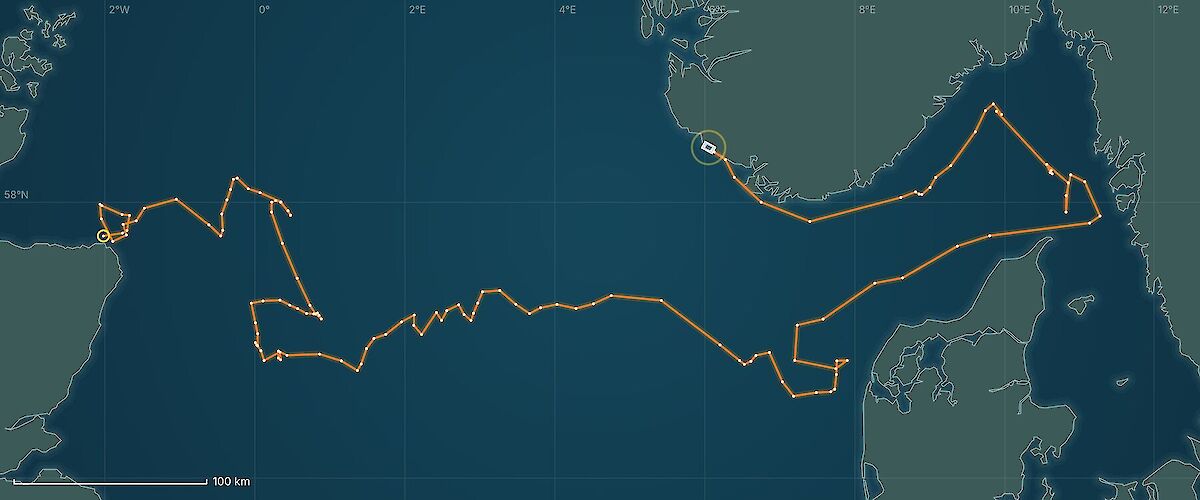
The capsule was released off Fraserburgh, Scotland, on 2 August 2026. It spent its first month looping off the northeast coast of Scotland, then drifted east towards Denmark and north towards Gothenburg, Sweden, before changing course towards Larvik, Norway. From there it followed the Norwegian coastline westwards and came ashore on 25 October. Geir Sæstad found it among debris on the shoreline.
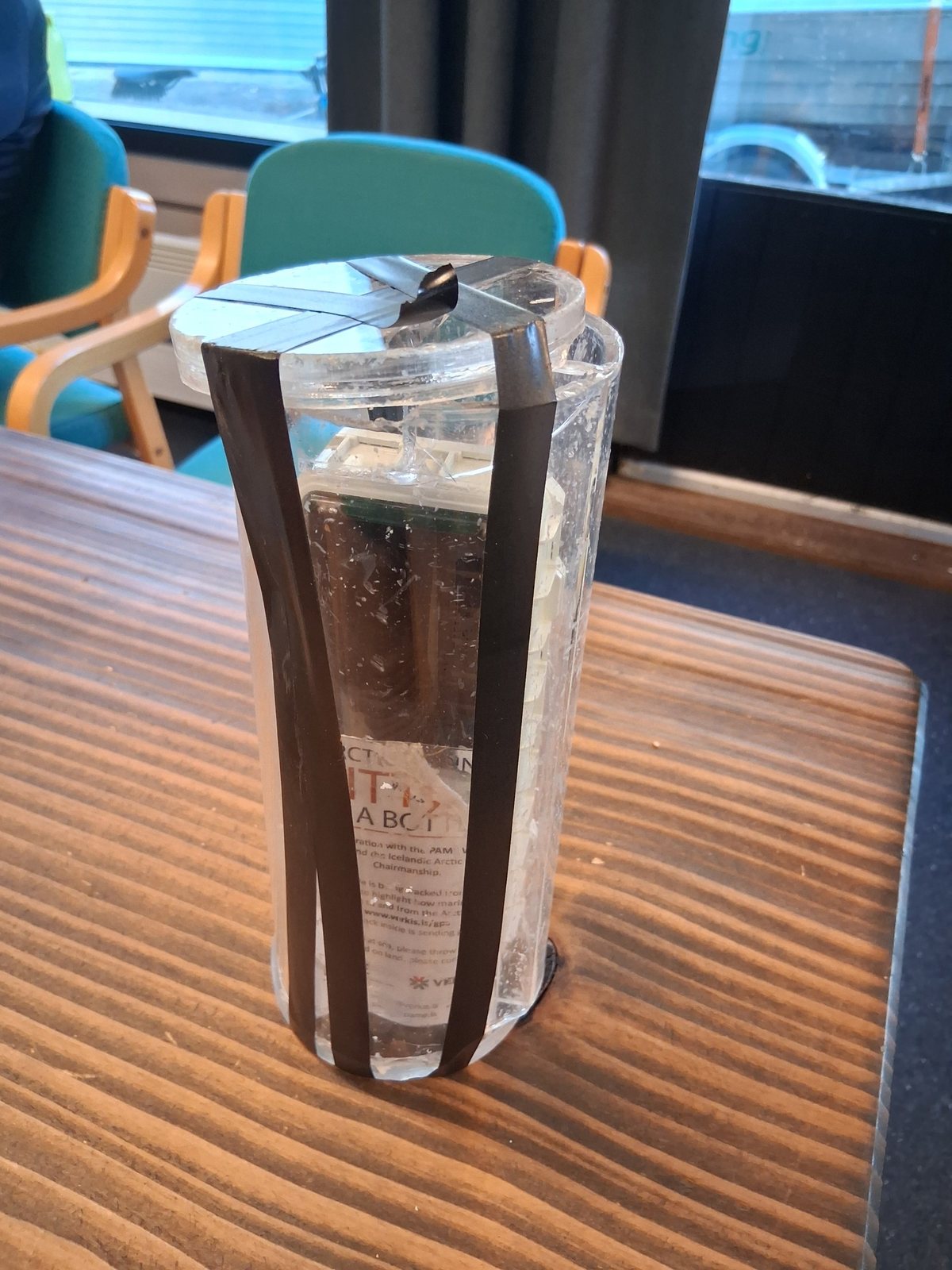
The journey left its mark. The capsule's yellow end caps had come off by the time it was found, perhaps on the rocky shore, though exactly how and when remains unknown.
Plastic in a Bottle · Capsule #11, PAME Scotland
How marine litter crosses borders: a capsule's drift from Scotland to Norway
- Released
- 2 August 2026, off Fraserburgh, Scotland
- Came ashore
- Rogaland, Norway
- Time at sea
- 84 days
What the journey tells us
Floating plastic litter rarely takes the shortest route from A to B. Driven by winds and currents, it can travel hundreds or even thousands of kilometres, cross national borders and spend weeks or months at sea before washing ashore.
That is what the experiment set out to illustrate. Marine litter is a transboundary problem, and what ends up on one country's beaches may have originated far beyond its borders.
Follow the capsules
This capsule is one of 11 released across the North Atlantic and the Arctic since 2019. Anyone can follow their journeys on PAME's Plastic in a Bottle live map, which shows how ocean currents connect distant shores.
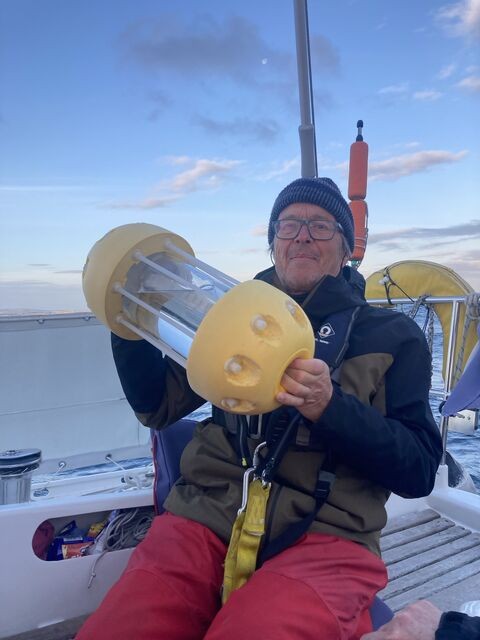
About this release
The capsule was released by Wouter-Jan Strietman and his colleagues at Wageningen Social & Economic Research (WSER), in collaboration with Dutch marine environmental expert and sailor Eelco Leemans of Leeways Marine, with funding from the Dutch government. The Plastic in a Bottle initiative is part of PAME's work on Arctic marine litter and is coordinated by the PAME Secretariat. The GPS-equipped capsules were developed and built by Verkís Consulting Engineers.