 Arctic Council Working Group
Arctic Shipping: PAME publishes report on small vessels in the Arctic
 The Protection of the Arctic Marine Environment (PAME) Working Group of the Arctic Council has published its latest Arctic Shipping Status Report (ASSR #6), providing a detailed look at the activities of "small ships" - vessels below 500 Gross Tonnage (GT) - operating in Arctic waters.
As of January 1, 2026, new amendments to the International Maritime Organization (IMO) Polar Code have officially extended safety of navigation and voyage planning requirements to several categories of smaller vessels.
Key Findings:
-
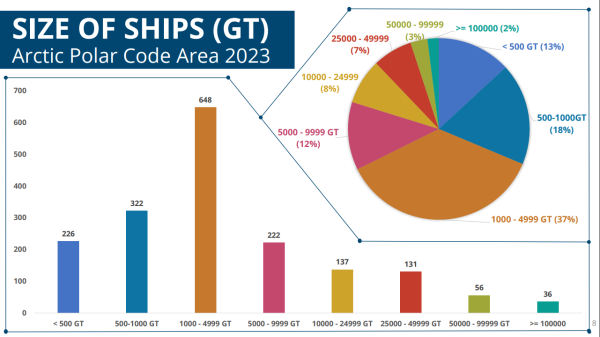
Total Vessel Growth: In 2023, there were 1,782 unique ships operating in the Arctic Polar Code area, up from 1,298 in 2013.
-
Small Vessel Presence: Vessels under 500 GT represent 13% of all unique ships in the Arctic, totaling 226 vessels in 2023.
-
Vessel Types: The small vessel category includes a diverse mix of general cargo ships, fishing vessels, yachts, research vessels, and tugs.
Regulatory Shift: The Polar Code Expansion
Historically, mandatory safety and pollution prevention measures under the Polar Code primarily targeted larger cargo ships (500 GT and above) and passenger ships. However, the new 2026 amendments now apply critical safety standards to:
-
Fishing vessels: 24 meters in length overall and above.
-
Pleasure yachts: 300 GT and upwards not engaged in trade.
-
Cargo ships: Between 300 GT and 500 GT.
Existing vessels built before 2026 have until January 1, 2027, to meet these new requirements.
The full Arctic Shipping Status Report #6 is available through here and utilizes data from the Arctic Ship Traffic Data (ASTD) System.